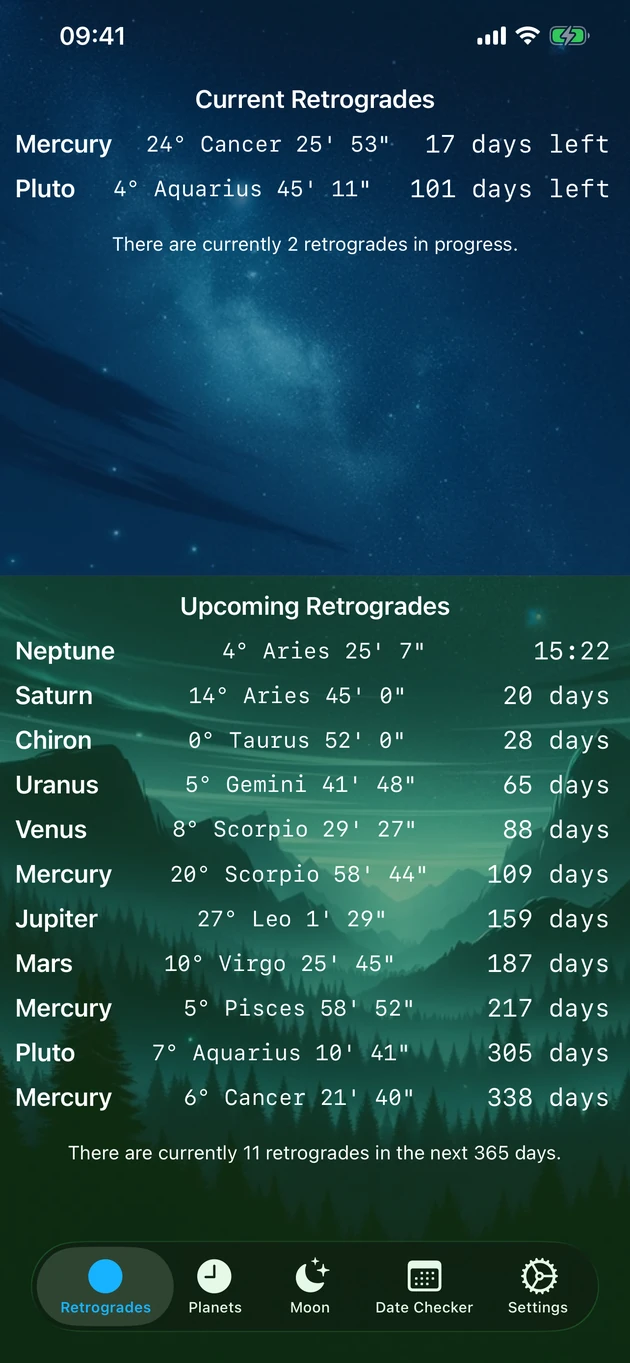
Every retrograde at a glance
See every current and upcoming retrograde at a glance.
 Planetary Retrogrades
iPhone · iPad · Widgets
When a planet appears to drift backward across the sky, astrologers call it retrograde — a stretch to slow down, review and rethink. Planetary Retrogrades shows you exactly which planets are retrograde right now, and counts down to every station to come.
Free to start · No account needed · 31 languages
Scan to install
on your iPhone or iPad
A retrograde is an optical illusion. As Earth and another planet circle the Sun at different speeds, there are stretches where that planet appears to slow, stop and drift backward across the sky — even though it never truly reverses course. Astronomers call these the stations and the retrograde motion.
In astrology, each retrograde is a time to pause and reconsider whatever that planet governs. Mercury retrograde is the famous one — blamed for crossed wires, travel snags and second-guessed decisions — but every planet from Venus to Pluto has its own retrograde season, and Chiron too.
Around each retrograde sits a shadow period: the planet crosses the same stretch of the zodiac three times, so the effect fades in before the station and lingers after it. Planetary Retrogrades tracks the exact station and shadow dates for all nine bodies, so you always know what's in motion.
The website shows you what's retrograde now. The app tracks every station, shadow period and Moon phase, right on your Home Screen.
See every current and upcoming retrograde at a glance.
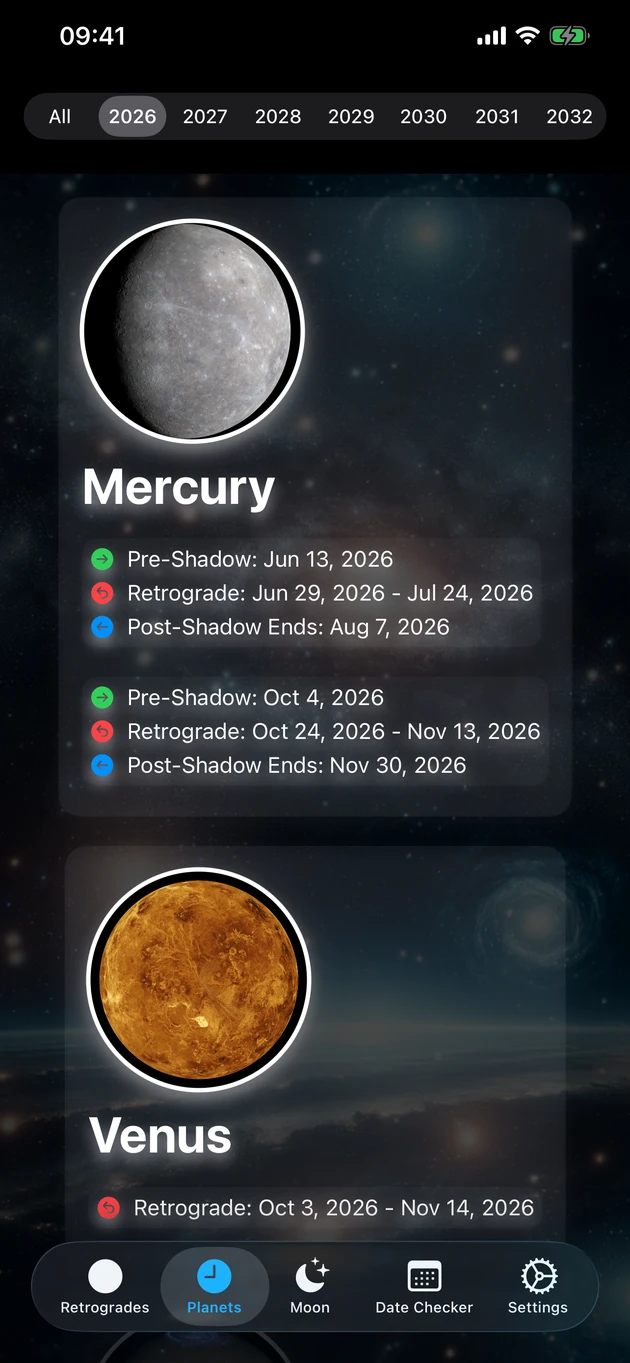
Retrograde and shadow periods for every planet, decades in advance.
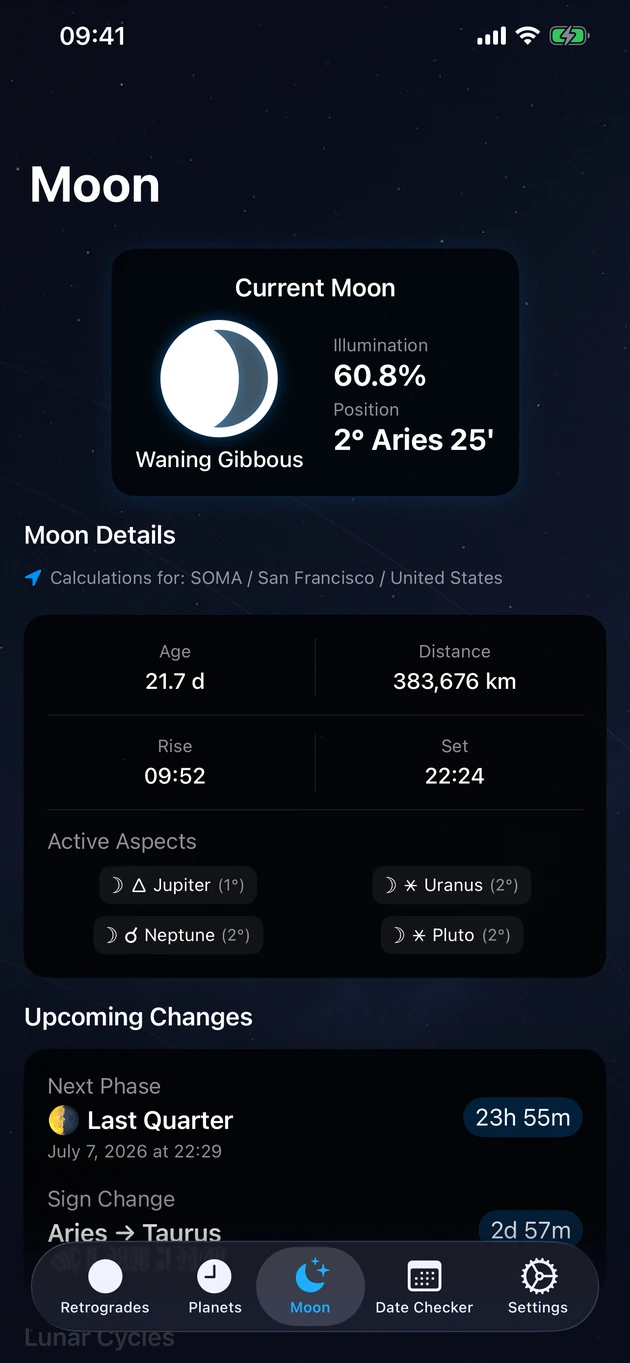
Phase, sign, illumination, and rise & set — for your exact location.
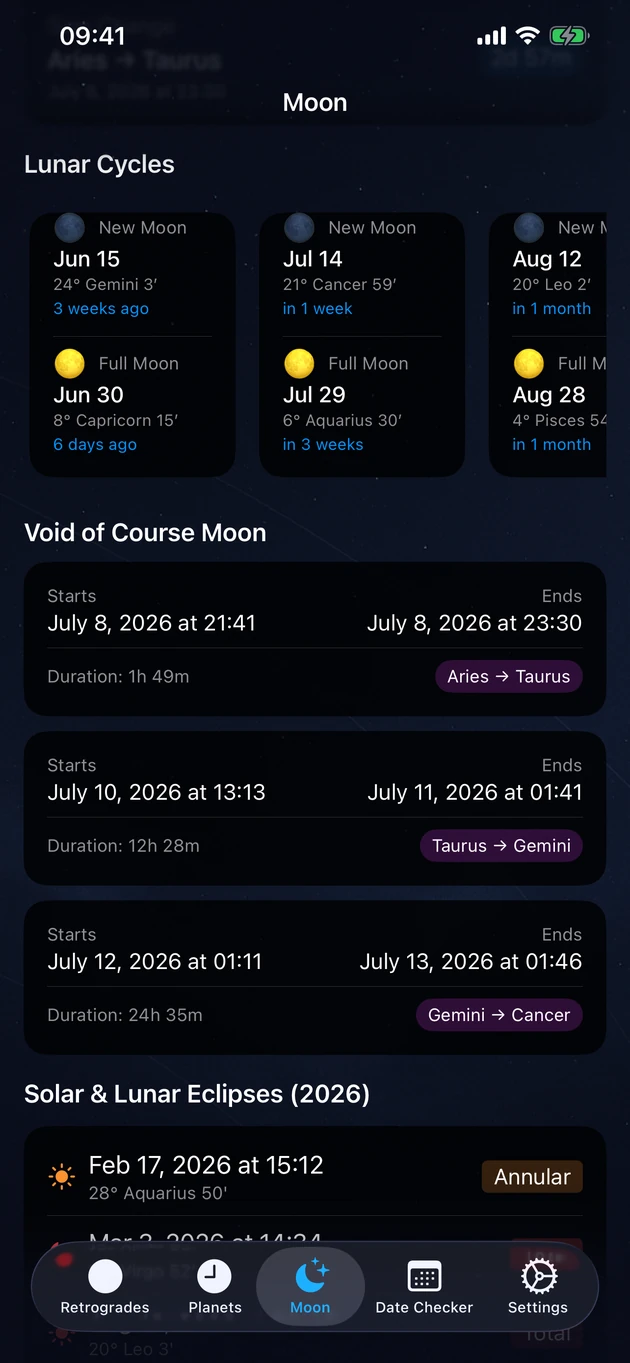
New and full moons, void-of-course periods, and the year's eclipses.
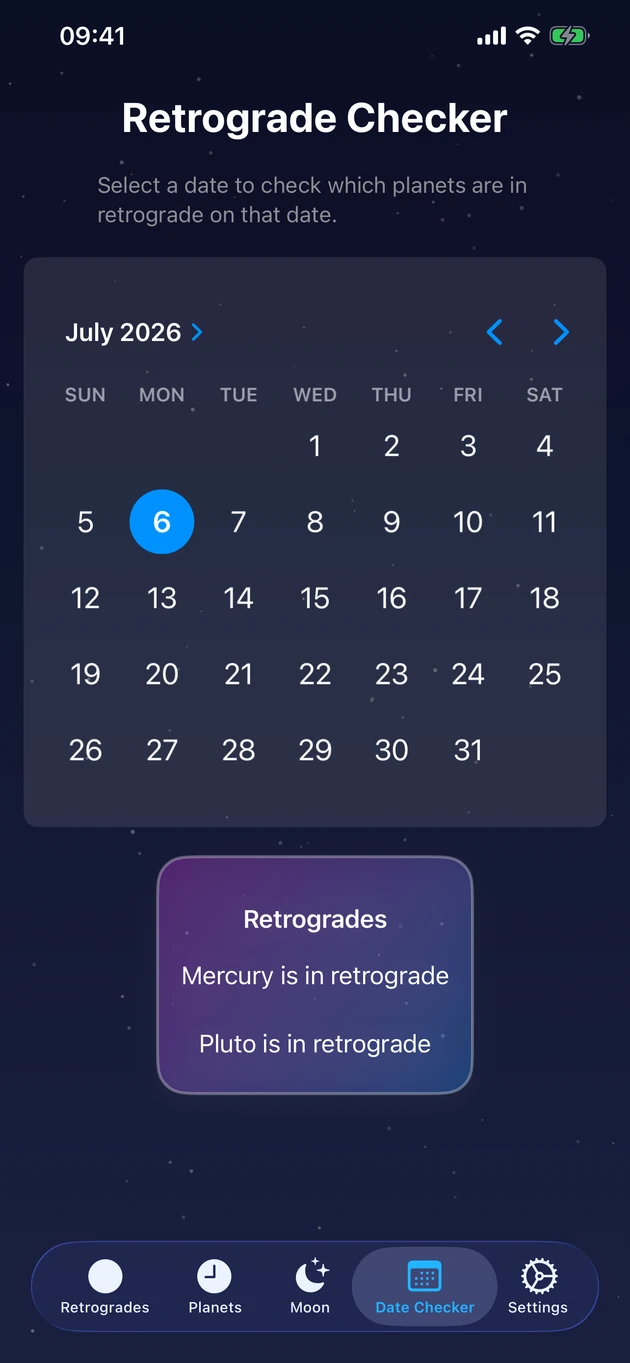
Pick a day and instantly see which planets are retrograde. App only
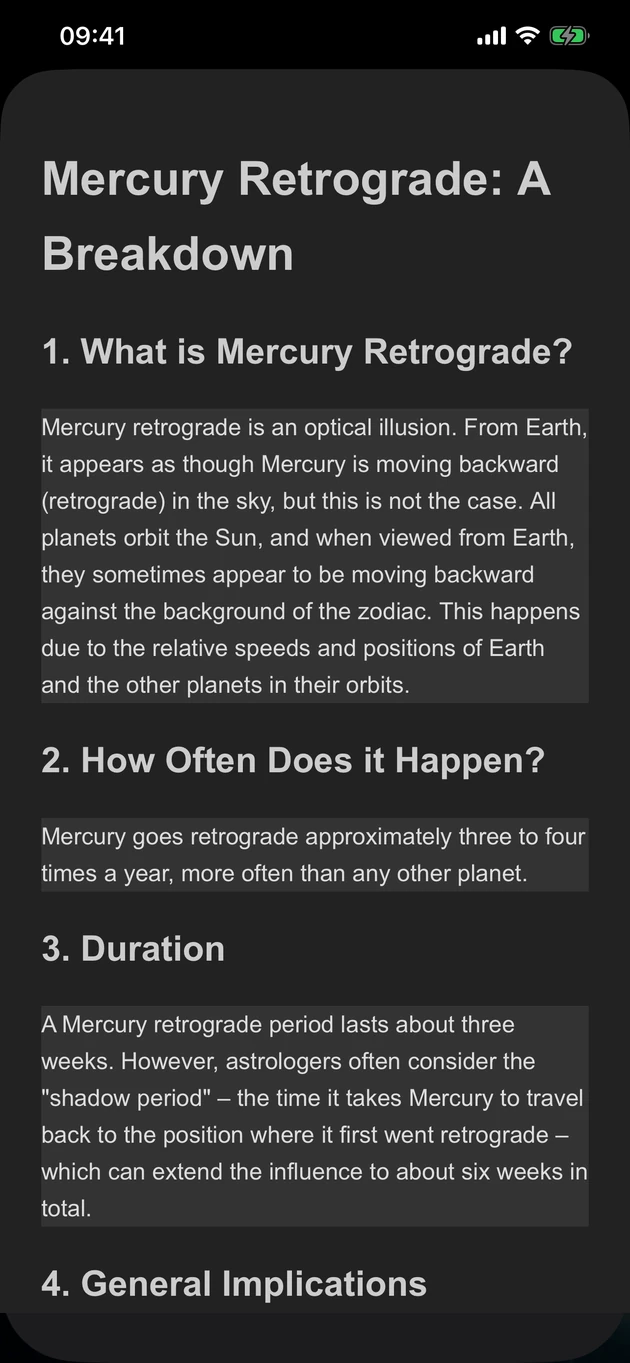
Clear guides to each planet's retrograde and how to navigate it.
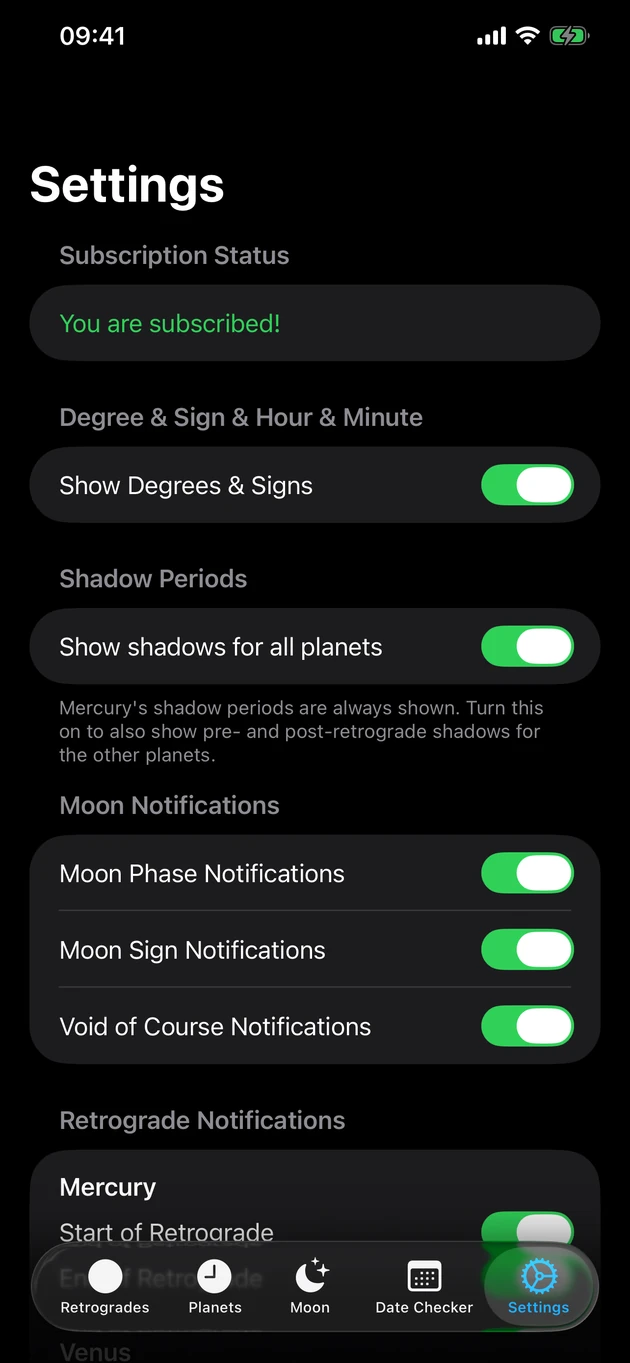
Be notified the moment a retrograde begins or ends — and on Moon changes. App only
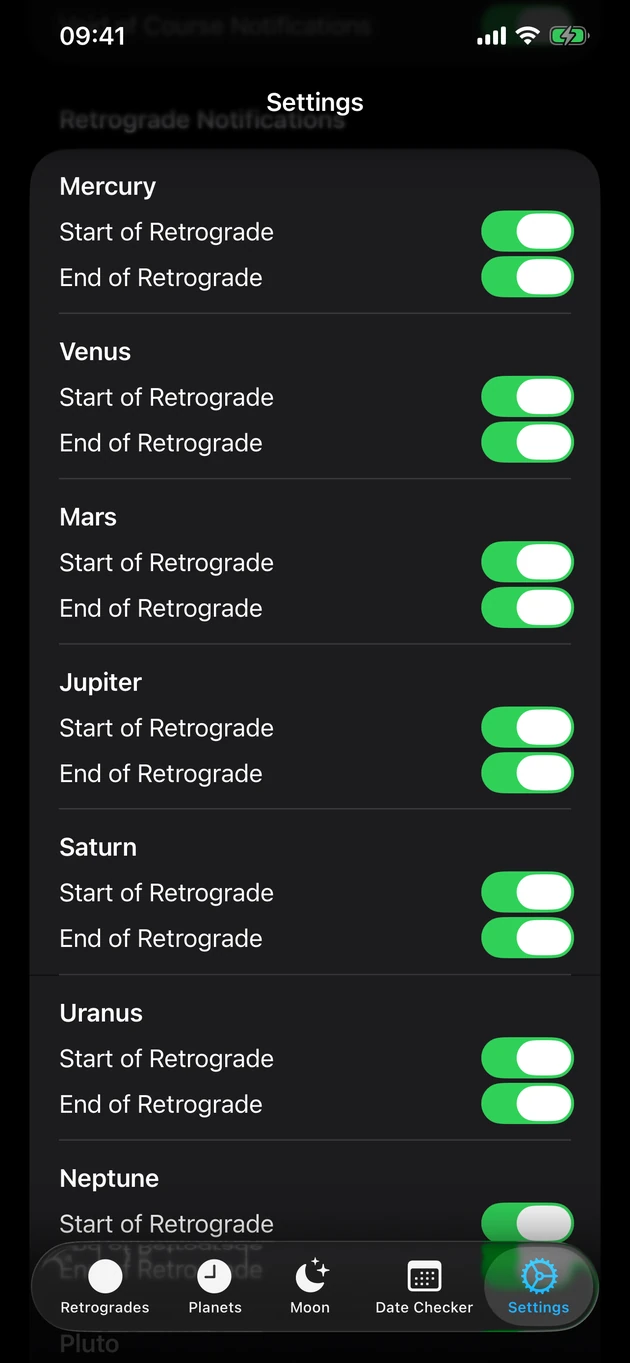
Turn on start and end notifications for the planets you choose. App only
The live tracker at the top of this page answers instantly: it lists every planet that is currently retrograde and counts down to the moment each one turns direct, updated in real time. For the full history and future dates, the Planetary Retrogrades app covers 1900 to 2100.
It is an apparent motion. As Earth and another planet orbit the Sun at different speeds, the planet sometimes looks like it slows, stops and moves backward across the sky. It never really reverses — but astrologers treat each retrograde as a time to slow down and review whatever that planet rules.
Before and after a retrograde, the planet passes over the same stretch of the zodiac it will retrace — so the effects tend to fade in beforehand and linger afterward. Planetary Retrogrades marks the pre- and post-shadow dates alongside every station, for all nine bodies.
All of them except the Sun and Moon. Mercury retrogrades three or four times a year; Venus and Mars far less often; and the outer planets — Jupiter, Saturn, Uranus, Neptune and Pluto — spend months retrograde every year. The app tracks Chiron too, for nine bodies in all.
Planetary Retrogrades is built for exactly this. It shows live retrograde status for all nine bodies — Mercury through Pluto, plus Chiron — with their pre- and post-shadow periods, minute-accurate station dates from 1900 to 2100, alerts when any planet stations, a complete Moon module, and Home-Screen widgets, in 31 languages. Where many retrograde apps stop at Mercury, this one covers the whole sky — and it's free to start.
Every station and shadow date is computed from professional-grade astronomy, validated against published ephemerides and accurate to the minute. The app and this website draw from the very same data.
Yes — it's free to download and use, with an optional premium upgrade that unlocks the 1900–2100 retrograde checker and the complete Moon module. Beyond live retrogrades it includes per-planet shadow periods, a full Moon module (phase, sign, illumination, void-of-course, rise, set and eclipses), station notifications, and Home-Screen widgets. No account required.
A planet "goes direct" when it ends its retrograde and resumes forward motion — the point marked as its direct station. The live panel at the top of this page counts down to exactly that for every planet currently retrograde, and the app lists every direct station from 1900 to 2100.
Astronomically it just means the planet appears to move backward from Earth's viewpoint — an illusion caused by our differing orbital speeds, not a real reversal. In astrology, a retrograde is read as a time to slow down and revisit whatever that planet governs: communication and plans for Mercury, relationships and money for Venus, drive and action for Mars, and so on.
Traditional astrology doesn't treat it as simply "bad" — it's seen as a time to review, re-check and rethink rather than rush ahead: back up your files, confirm plans, revisit unfinished work. Whether you follow it closely or just like knowing, Planetary Retrogrades tells you exactly when each window opens and closes. (Retrograde meanings come from traditional astrology, not scientific fact.)